When we sit down with clients, one of the most common questions we hear is: “What is a hard inquiry, and should I be worried about it?” If you’ve been checking your credit report and noticed something called a hard inquiry, you’re not alone.
Here’s the good news: we can help you understand what it means, how it affects your credit score, and what to do if something doesn’t look right.
If you believe there’s an error or an unauthorized credit check on your report, contact Fair Credit Attorneys to review your situation, explain your rights, and take action on your behalf. Let’s walk through this together.
What Is a Hard Inquiry?
A hard inquiry, sometimes called a hard credit check, happens when a lender reviews your credit file as part of an application for credit.
In simple terms, this means you’ve given permission for someone to take a deeper look at your credit history.
Hard inquiries usually occur when you apply for things like:
- A credit card
- A mortgage loan
- An auto loan
- Personal loans
- Student loans or a private student loan
This is part of the lender’s underwriting process, where they decide whether to approve your credit application.
Each time this happens, a credit inquiry is recorded on your personal credit report by the credit bureaus (also known as a credit reporting agency).
How Hard Inquiries Affect Your Credit Score
Now let’s talk about what really matters: your credit score.
A hard inquiry can have a small impact on your credit scores, but it’s usually not dramatic. Think of it as a minor dip rather than a major drop.
Here’s what we typically see:
- A single inquiry may lower your score by a few points
- The credit impact is temporary
- Most credit scoring models reduce the effect after about 12 months
- The inquiry can remain on your full credit report for up to 2 years
Your credit scoring models look at hard inquiries as a signal that you may be taking on new debt. But they also understand normal behavior.
For example, if you’re comparing rates for a:
- Mortgage loan
- Auto loan
- Private student loan
That’s called rate shopping, and most models will treat multiple inquiries within a short period as a single inquiry.
Hard Inquiry vs. Soft Inquiry
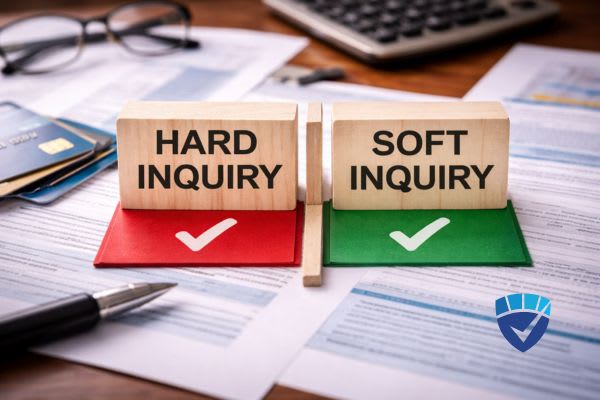
This is where many people get confused, so let’s break down the key differences.
Hard Inquiry
- Requires your permission
- Happens during a credit application
- Can affect your credit score
- Visible to lenders
Soft Inquiry (Soft Credit Check)
- Does not affect your score
- Can happen without your permission
- Often used for informational purposes
Examples of soft inquiries include:
- Checking your own report through Credit Karma
- Using a credit monitoring service
- Pre-approval offers
- Employment background checks
- Routine credit checks by existing lenders
You may also hear this called a soft pull or soft credit check; they all mean the same thing.
When a Hard Inquiry May Be a Problem
Not all hard inquiries are bad, but some can be a red flag.
We tell our clients to pay close attention if they see:
- A hard inquiry they don’t recognize
- Multiple inquiries from unknown lenders
- Activity that suggests they may be a victim of identity theft
An unauthorized credit check can happen for a variety of reasons, including fraud or reporting errors.
It can also affect your:
- Credit history
- Ability to get approved for new credit
- Overall credit scores
If something looks off, don’t ignore it. This is exactly where legal help can make a difference.
How to Check for Hard Inquiries on Your Credit Report
We always recommend reviewing your credit report regularly. It’s one of the best ways to protect your financial health.
Here’s how you can do it:
- Request your full credit report from the major credit bureaus
- Look for the section labeled “inquiries”
- Review each credit inquiry carefully
- Compare them to your recent credit card application or loan activity
Using a credit monitoring service can also help you track changes in real time.
Pay special attention to anything that doesn’t match your records. This could indicate an issue.
How to Dispute Hard Inquiries

If you find a hard inquiry that doesn’t belong, you have the right to dispute it, but you don’t have to handle the process alone.
When You Can Dispute a Hard Inquiry
You may have a valid claim if:
- The inquiry was made without your permission
- It’s tied to identity theft
- The information is inaccurate or incomplete
- It’s connected to the wrong person or account
Steps to Dispute a Hard Inquiry
Here’s the general process:
- Get your reports
Pull your personal credit report from each credit reporting agency - Identify the issue
Highlight any unfamiliar hard inquiry - Gather evidence
Collect documents showing you didn’t authorize the credit check - File a dispute
Submit a formal dispute to the credit bureaus - Contact the creditor
Ask the company to verify the credit application - Follow up
Monitor your credit file and responses carefully
Where Fair Credit Attorneys Make a Real Difference

While the steps above sound simple, many disputes are delayed, ignored, or incorrectly verified. That’s where Fair Credit Attorneys can step in and strengthen your case.
We go beyond a basic dispute by:
- Reviewing your full credit report to uncover all credit report errors
- Identifying identity theft or mixed credit reports that can lead to mortgage denials
- Handling communication with credit bureaus and creditors
- Challenging improper investigations under the Fair Credit Reporting Act (FCRA)
We also address related issues that often come with hard inquiry problems, including:
- Credit card denials caused by inaccurate reporting
- Background check errors and employment background check issues
- Serious mistakes like being reported as deceased on your credit report
If your rights have been violated, we can take legal action, help recover damages, and work to correct your credit history more effectively.
In short, we don’t just dispute the hard inquiry; we identify the root problem and advocate for you every step of the way.
Tips to Protect Your Credit from Unauthorized Inquiries
Good credit literacy and habits go a long way. Here’s what we recommend to protect your credit history:
- Check your credit report regularly
- Use credit monitoring tools
- Set up alerts with a credit monitoring service
- Limit how often you submit a credit card application
- Be cautious with personal information
You can also consider:
- Freezing your credit
- Setting fraud alerts
- Monitoring your balances on loans and credit utilization
Maintaining responsible credit behavior helps minimize risk and supports long-term financial planning.
Why Hard Inquiries Matter in the Bigger Picture
A hard inquiry is just one part of your overall credit profile.
Lenders also look at:
- Your payment history
- Your credit utilization
- Your total balances on loans
- Your available credit limit
- Requests for credit limit increases or credit line increases
So while a hard inquiry matters, it’s only one piece of a larger puzzle.
Final Thoughts
Understanding what a hard inquiry is puts you in control of your financial future. Most of the time, it’s a normal part of applying for credit. But when something doesn’t look right, especially in cases of an unauthorized credit check, it’s important to act quickly.
If you’re unsure about something on your credit report or you believe your rights have been violated, Fair Credit Attorneys is here to help.
We work with clients every day to review credit reports, dispute inaccurate information, and hold companies accountable when they fail to follow the law.
Contact Fair Credit Attorneys today for a consultation, and let’s make sure your credit is accurate, protected, and working for you, not against you.
Frequently Asked Questions
How much does a hard inquiry affect your credit score?
A hard inquiry usually lowers your credit score by a few points. The impact is typically small and temporary, and most credit scoring models reduce its effect after about 12 months.
How long do hard inquiries stay on your credit report?
Hard inquiries can stay on your credit report for up to two years. However, their impact on your credit score usually decreases much sooner.
Can I remove a hard inquiry from my credit report?
You can only remove a hard inquiry if it is inaccurate or unauthorized. Valid inquiries from legitimate credit applications will typically remain on your report.
What should I do if I see an unauthorized hard inquiry?
If you notice a hard inquiry you don’t recognize, you should review your credit report, gather any supporting documents, and file a dispute with the credit bureaus. It may also be a sign of identity theft, so acting quickly is important.