On This Page
You pull your credit report expecting to see your own financial history. Instead, you find accounts you never opened, an address you never lived at, or a collection notice tied to a name that almost, but not quite, matches yours. If this sounds familiar, your credit file may be mixed with someone else’s.
A mixed credit file is more than an inconvenience. It can trigger loan denials, a lower credit score, and background check errors that follow you into a job application or a lease. Federal law gives you real options here, and you don’t have to untangle this on your own. If you’ve already disputed the error and gotten nowhere, a free case review with our firm can help you understand exactly where you stand and what to do next.
What Is a Mixed Credit File?

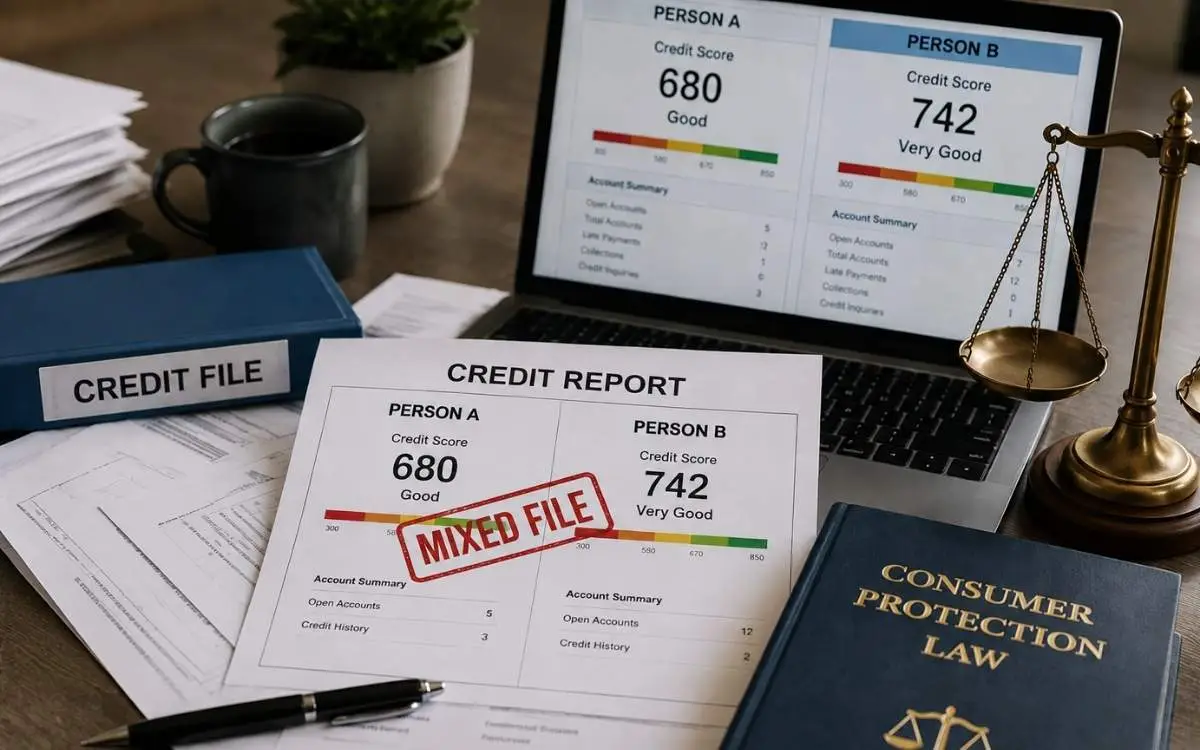
A mixed credit file happens when a credit bureau combines your credit history with someone else’s information inside a single credit report.
How your file gets built:
- Credit reporting agencies, Equifax, Experian, and TransUnion, create your credit profile using identifiers like your name, Social Security number, date of birth, and current and past addresses
- Their automated matching system uses these identifiers to decide which accounts belong to you
- When the system pulls in the wrong person’s account numbers, credit accounts, or public records, the result is a file that no longer reflects your actual credit history
Not the same as a routine error:
- A single wrong balance is a routine credit reporting error
- A mixed file often means an entire stranger’s financial history, including their debts and mistakes, has been layered onto your credit profile
- The pattern we see most often: two people with similar names, or a single transposed digit in a Social Security number
We handle these cases as part of our broader mixed credit reports work.
How Does a Credit File Get Mixed?
- Automated processes that rely on partial Social Security numbers and prioritize speed over accuracy
- Data entry errors when a furnisher submits an account under the wrong name or account number
- Similar or identical names, such as a “Jr.” and a “Sr.” at the same address
- Outdated addresses that link you to a previous resident with a poor credit rating
- Family members, such as a parent and child, who share a similar credit profile
None of these causes are new. Credit bureaus have relied on the same matching protocols and data entry systems for decades, and their automated matching system is built for volume, not for carefully verifying personal identification information.
Warning Signs Your Credit File Might Be Mixed
- Credit cards, loans, or collection accounts you don’t recognize
- Addresses you’ve never lived at
- A different date of birth or a misspelled name on your report
- Sudden credit denials or a credit score that dropped for no reason you can explain
- A landlord or employer citing background check errors or tenant screening errors you can’t account for
- A court judgment or bankruptcy filing that isn’t yours (a related issue we also see in post-bankruptcy credit reporting problems)
Where a Mixed File Causes Real Damage
| Situation | What Can Happen |
|---|---|
| Auto loan or mortgage application | Loan denials or a worse rate based on a stranger’s debt |
| Credit card application | Credit denials tied to someone else’s credit history |
| Job offer | Background check errors that cost you the position |
| Apartment application | Tenant screening errors that cost you housing |
| Day to day life | Emotional distress and reputational harm from fighting an error that was never yours |
Your Rights Under the Fair Credit Reporting Act
The Fair Credit Reporting Act, or FCRA, is the federal law that governs how credit bureaus and furnishers handle your consumer data.
Your two core protections in a mixed file case:
- Bureaus must follow reasonable procedures to ensure maximum possible accuracy in your credit report
- Once you dispute inaccurate information, the bureau has a legal duty to investigate and correct or delete anything it can’t verify
When it becomes a legal violation, not just a mistake:
- If a bureau’s dispute resolution system keeps reinserting the same stranger’s information after you’ve already proven it isn’t yours, that pattern can amount to a violation of consumer protection laws, not just an isolated error
Who else oversees this:
- The Federal Trade Commission and the Consumer Financial Protection Bureau both oversee how these credit laws and regulations apply, and both confirm you have the right to dispute errors for free and to escalate when the bureau doesn’t fix them
- If a debt collector is also involved in reporting the wrong account, the Fair Debt Collection Practices Act may give you additional protection against ongoing collection efforts
Disputing on Your Own vs. Working With an FCRA Attorney
| Disputing on Your Own | Working With an FCRA Attorney | |
|---|---|---|
| The dispute process | You submit dispute letters and wait on the bureau’s timeline | We build a documented record designed to hold up if the bureau doesn’t comply |
| When the bureau “verifies” the wrong information | You’re often back where you started | We can pursue legal action under the FCRA |
| Cost to you | Free, but time-consuming | Contingency fee, you pay nothing unless we win |
| Compensation | Not typically pursued | We can pursue monetary damages for the harm caused |
What to Do If You Suspect a Mixed Credit File
- Pull your credit report from all three bureaus, not just one. A mix in one bureau’s file doesn’t mean the others are clean.
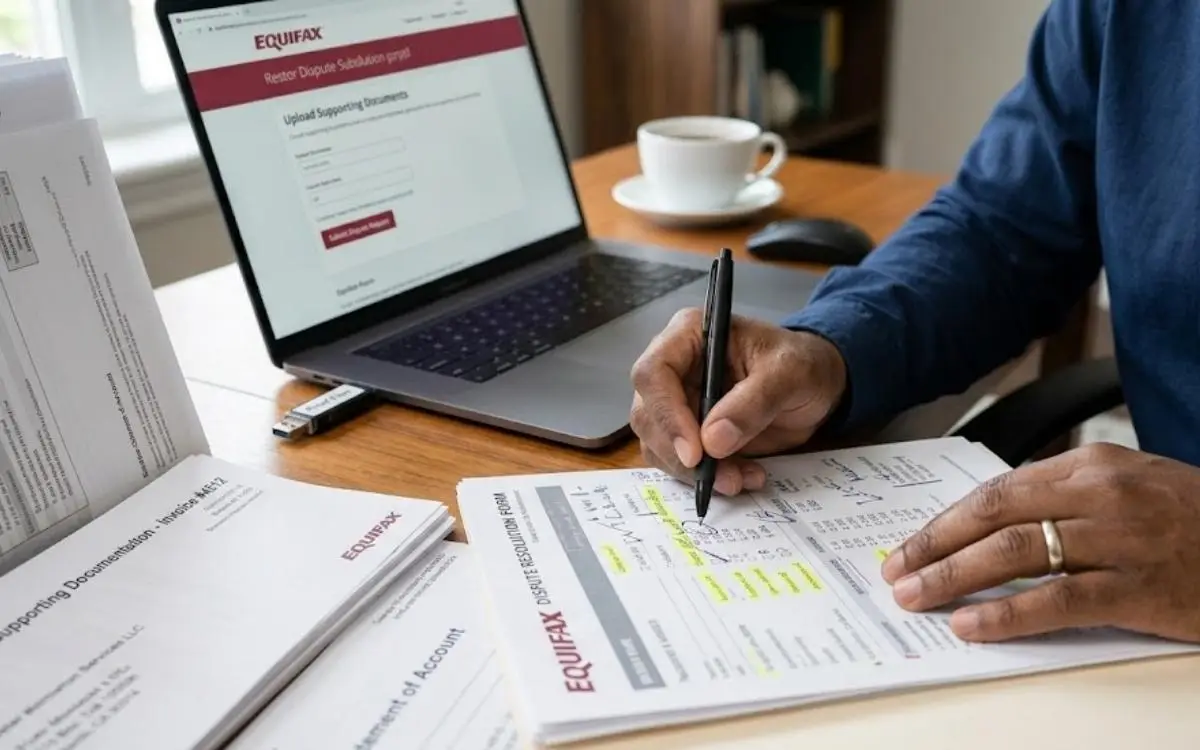
- Highlight every account, address, and identifying detail that isn’t yours.
- Gather supporting identity documents, proof of your correct Social Security number, or records showing you never opened the accounts in question.
- Send written dispute letters to each bureau and keep a copy of everything.
- Consider a security freeze on your credit file while the dispute is pending, to slow further mixing.
- If a bureau “verifies” information that is clearly not yours, or the same error keeps reappearing, that’s the point to talk to an attorney about your legal procedures and options.
When Disputing Isn’t Enough

Mixed file cases aren’t always a one-round fix. Credit bureaus sometimes verify the wrong information simply because their matching system flags the file the same way twice. When that happens, disputing again on your own rarely changes a lender’s next credit decision about you.
This is also where it matters to understand the difference between a credit repair company and a credit report attorney. A credit repair company can send dispute letters on your behalf, but it can’t sue a credit bureau or a furnisher for violating your rights. Only an FCRA attorney can pursue an FCRA lawsuit that holds the credit bureau accountable and seeks compensation for the harm the mixed file has already caused your personal finances.
What Compensation May Be Available
Every mixed file case is different, and no attorney can promise a specific result before reviewing your credit history and the credit reporting error involved. That said, the FCRA allows consumers to pursue monetary damages when a credit bureau fails to correct a proven mixed file, which can include compensation for credit denials, emotional distress, and the time spent fighting the error, along with attorney’s fees in a successful case.
Talk to an FCRA Attorney About Your Mixed Credit File

A mixed credit file isn’t something you have to accept or untangle alone. If you’ve already disputed the error and the bureau keeps getting it wrong, reach out for a free case review. We’ll look at your credit report, explain your options honestly, and tell you whether legal action makes sense for your situation.
Frequently Asked Questions
A mixed credit file happens when a credit bureau attaches another person’s accounts, addresses, or public records to your credit report, usually because of a matching error involving a similar name or Social Security number.
Any of the three major bureaus, Equifax, Experian, or TransUnion, can create a mixed file, and the error can show up on one report but not the others.
Yes, you can start by disputing directly with each bureau in writing. Many simple mistakes get resolved this way, but a mixed file often needs more documentation and follow-up than a routine dispute.
That’s a sign the dispute process alone isn’t working. At that point, it’s worth talking to an attorney about your legal options and whether you have a claim for damages.
No. We work on contingency, which means you pay nothing unless we win your case.