On This Page
A job offer, a gig platform account, or a lease can disappear over a single wrong line on a background check. The harm is real, even though you did nothing to cause it.
Checkr is one of the largest background-screening companies in the country, used by employers and gig platforms like Uber, Lyft, DoorDash, Instacart, and Amazon. When its report contains someone else’s criminal history or the wrong identity match, the applicant pays the price, not Checkr.
Federal law gives you the right to fix this. If a Checkr report cost you a job, a gig account, or an apartment, Fair Credit Attorneys can review what happened and explain your options at no cost to you. Call us for a free case review.
What Checkr Actually Does
Checkr is a consumer reporting agency (CRA), a term the FCRA uses for a company that sells information about you to businesses making decisions about you, like whether to hire you.
Checkr is not a credit bureau. Companies like Equifax, Experian, and TransUnion handle credit history and credit checks. Checkr handles background screening instead, including:
- Criminal record searches
- Employment verification
- Education verification
- Driving record checks
- Drug tests
Both types of companies are consumer reporting agencies under federal law, with the same basic duty: get it right, and fix it when they don’t.
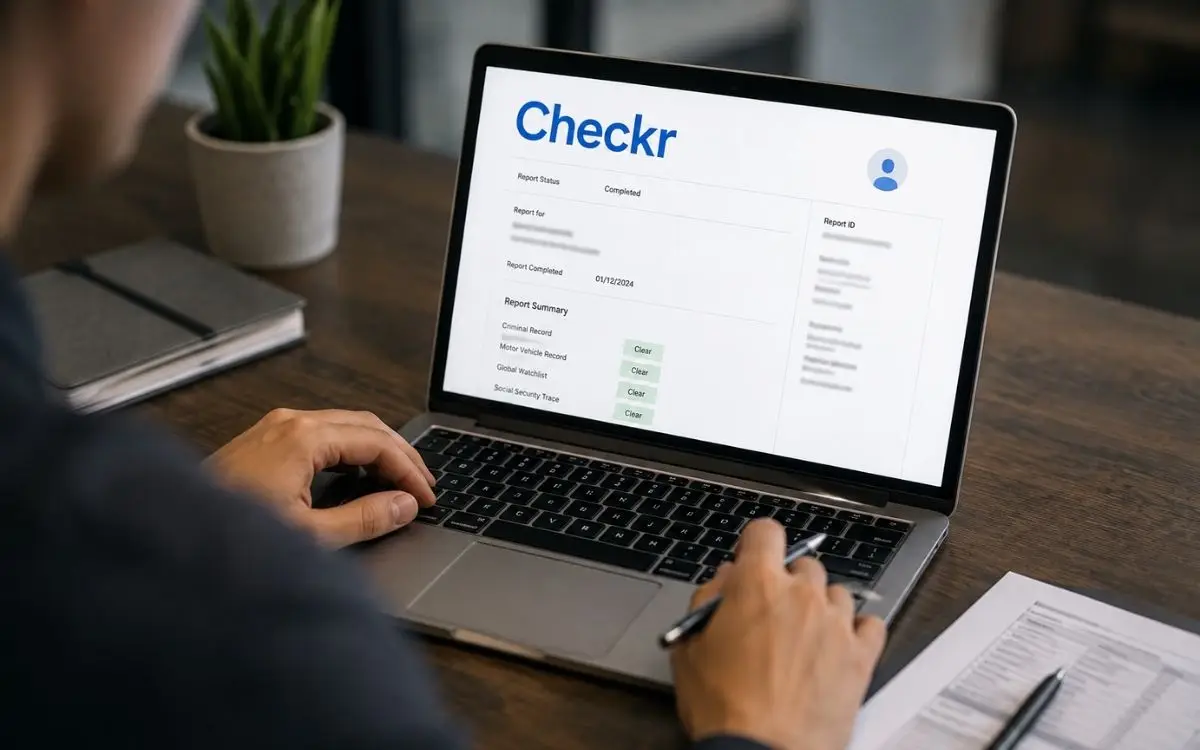
Checkr pulls its information from criminal databases, court records, motor vehicle records, and other public records, then compiles it into a report the employer reviews through a digital dashboard. The employer never sees the raw court documents, only whatever Checkr’s system decided to include.
Common Checkr Background Check Errors
Background screening touches a lot of different records, which means there are a lot of places for something to go wrong. These are the errors that show up most often in Checkr reports.
| Type of check | Common error |
|---|---|
| Criminal record search | Someone else’s criminal history attached to your file because of a shared name or similar personal identification information |
| Criminal record search | Sealed charges or expunged charges that should not appear at all |
| Criminal record search | Old arrests over the federal reporting limit still showing up |
| Driving record check | A suspended or revoked license status that belongs to another driver |
| Employment verification | Wrong dates, titles, or employment history that don’t match your actual work history |
| Drug screening | Drug test results reported to the wrong applicant or reported incorrectly |
| Identity verification | Your file confused with someone else’s because of identity confusion in the matching process, sometimes even a mistaken deceased reporting flag from a Social Security Administration data mismatch |
If your report shows criminal record information, driving records, or employment history that isn’t yours, that’s not a technicality. It’s inaccurate information that federal law says should not be there, and it may be why you lost an opportunity you had already earned.
Why These Errors Happen
Checkr, like most large background-screening companies, relies on automated systems to match your name, date of birth, and other data against millions of court records and databases. That speed comes at a cost: identity matching software can confuse two people who share a similar name, birth year, or other personal identification information.
This is how a person with a common name ends up with a stranger’s felony conviction on their report, or how a court-dismissed arrest still shows up. The system found a match. It just found the wrong one.
This isn’t unique to Checkr. Any background check company that leans on automated matching without a way to catch these mistakes can produce the same result, and the FCRA holds all of them to the same standard: follow reasonable procedures to keep your report accurate.
Your Rights Under The Fair Credit Reporting Act
The FCRA is a federal law that applies the same way in every state. It gives you specific rights when a consumer reporting agency like Checkr has your information wrong.
- The right to accuracy. Consumer reporting agencies must follow reasonable procedures to assure maximum possible accuracy of the information in your background report.
- The right to dispute. You can dispute an account, a charge, or any other item on your report that you believe is inaccurate or incomplete.
- The right to know who pulled your report. Background check companies can only provide reports for a permissible purpose, such as employment screening you authorized in writing.
- The right to notice before you’re turned down. If an employer plans to deny you a job because of your report, federal law requires specific notice before and after that decision.
- The right to sue for violations. If a company violates the FCRA and you’re harmed, you may have a legal claim.
None of this means every mistake automatically turns into a lawsuit. It means the law gives you a process, and if that process fails, it gives you legal options.
How To Dispute a Checkr Background Check Error
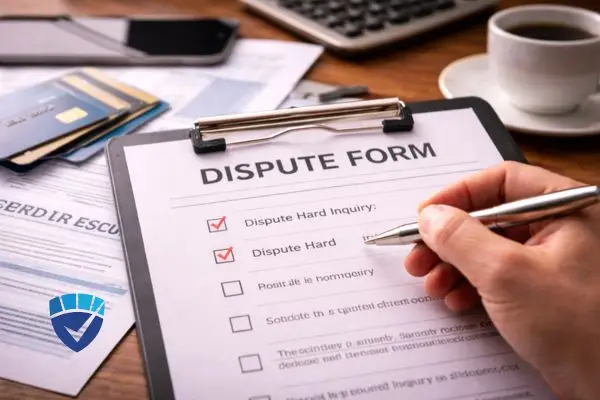
If you find inaccurate information on a Checkr report, you have the right to challenge it directly with Checkr, not just with the employer who requested it.
- Request your report. Ask Checkr directly for a copy of the background report the employer received.
- Identify the specific error. Note exactly which criminal records, court records, or employment history entries are wrong.
- Submit a dispute form. Checkr and most background-screening companies provide a dispute process for consumers to challenge inaccurate information, similar to how credit bureaus handle a credit report dispute.
- Provide supporting documents. Court documents, employment records, or other proof that supports your position strengthens the dispute.
- Wait for reinvestigation, and follow up. The clock on your dispute doesn’t run forever, and neither should your patience if the company misses it.
Here is roughly how that timeline is supposed to work under federal law:
| Step | Typical timeframe |
|---|---|
| You submit a dispute to the consumer reporting agency | Day 0 |
| Agency must complete its reinvestigation | Within 30 days |
| Extension if you send relevant new information during the review | Up to 15 additional days |
| Agency must delete or correct information it can’t verify | Promptly after reinvestigation ends |
If the 30-day window (or the extended window) passes with no real investigation, or Checkr simply reverifies the same wrong information without checking it, that may itself be an FCRA violation.
Pre-Adverse Action And Adverse Action Notices
A background-check job denial triggers two required notices under the FCRA: one before the decision, one after.
Before the decision: the employer must send a pre-adverse action notice that includes:
- A copy of the report the employer relied on.
- A summary of your rights under the FCRA.
After the decision: if the employer moves forward, you’re entitled to an adverse action notice that includes:
- The background check agency’s name and contact information.
- A statement that the agency did not make the hiring decision.
- Notice of your right to dispute the report and get a free copy of it.
Skipped past one of these notices without reading it closely? Take a second look. It’s often the clearest paper trail of what went wrong and when.
What You May Be Entitled To

FCRA damages depend heavily on the facts of your case, and whether a violation is found to be negligent or willful, so no attorney can promise you a specific number before reviewing your situation. In general terms, federal law allows for a few categories of recovery.
- Actual damages, which can include lost wages from a rescinded job offer, the cost of a lost apartment, or documented emotional distress connected to the error.
- Statutory damages for willful violations, separate from actual damages, though the amount is decided case by case and is never guaranteed.
- Punitive damages in cases involving willful conduct, again decided by a court based on the facts.
- Attorney’s fees and costs in a successful case, which is part of why many FCRA claims can move forward without you paying out of pocket.
An attorney can only tell you what your case may be worth after reviewing your background report, your denial notices, and the timeline of what happened.
What To Do Next
If a Checkr report cost you a job, a gig platform account, or housing, a few concrete steps protect your case while you decide what to do.
- Request the full report Checkr sent to the employer, not just the denial letter.
- Save the pre-adverse action notice and the adverse action notice if you received either one.
- Write down the timeline: when you applied, when you were denied, and when you noticed the error.
- Avoid resubmitting personal identification information like your Social Security number to multiple background check companies while you sort out the dispute.
- Talk to legal counsel before assuming the dispute process alone will fix everything, especially if you already lost income or an opportunity because of the error.
How Fair Credit Attorneys Can Help
We are a consumer protection law firm, not a credit repair company. We don’t promise to erase accurate information from anyone’s record. What we do is hold background check companies and employers accountable when the Fair Credit Reporting Act is broken.
If Checkr’s report on you contained inaccurate information, we can review:
- Your background report
- Your pre-adverse action and adverse action notices
- The timeline of what happened
…and tell you honestly whether you have an FCRA claim worth pursuing.
A Checkr mistake is not your mistake to absorb quietly. If a wrong background report cost you a job, a gig platform account, or an apartment, reach out to Fair Credit Attorneys today for a free consultation and find out what your next step should be.
Frequently Asked Questions
No. Checkr is a consumer reporting agency that handles background screening, such as criminal record checks, driving records, and employment verification. Credit bureaus like Equifax, Experian, and TransUnion handle credit history and credit checks. Both are regulated under the FCRA, but they report different information.
It shouldn’t. Sealed charges and expunged charges are not supposed to appear on a background report, since the court has already removed or restricted them. If they show up anyway, that’s a strong sign the report contains inaccurate information you can dispute.
Federal law generally gives a consumer reporting agency 30 days to reinvestigate a dispute, with a possible 15-day extension if you send new, relevant information during that window.
You may have a claim against Checkr, the employer, or both, depending on what went wrong and who is responsible for it. An attorney can review your specific facts and explain who the right party is in your case.
You may still have options. Lost income and a documented job denial are part of what a court can consider when deciding damages in an FCRA claim, so acting on the error late is better than not acting on it at all.