On This Page
You did everything right. You applied, interviewed, and got the offer. Then the background check came back, and suddenly the offer disappeared, or the start date got pushed back with no explanation.
If that happened to you, the problem may not be your history at all. It may be a mistake in the report. Background check errors happen more often than most job seekers realize, and when one costs you a real opportunity, you have federal rights to do something about it.
This article explains what an inaccurate background check looks like, why these mistakes happen, and the dispute process the law gives you. If a background check error has already cost you a job, contact us for a free case review, and we will walk through what happened with you at no upfront cost.
What Counts as an Inaccurate Background Check
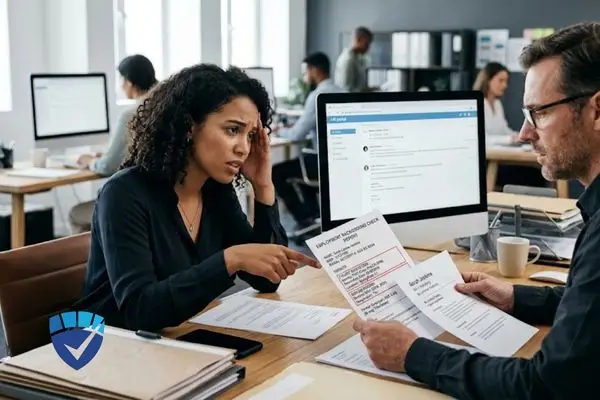
A background check for a job usually pulls information from several sources: criminal record databases, county court records, state reports, driving records, past employers, and schools. The company that compiles this information into a background check report is called a consumer reporting agency under federal law, the same category that covers credit bureaus for credit reporting.
An inaccurate background check happens when that report contains information that is wrong, outdated, incomplete, or does not actually belong to you. Sometimes the error is small. Sometimes it is enough to sink a job offer entirely.
Common Employment Background Check Errors
| Error Type | What Usually Causes It |
|---|---|
| Criminal record mismatch | Common name or similar Social Security number matched to someone else’s record |
| Outdated criminal convictions | An expunged or sealed conviction still showing up in a criminal background search |
| Employment history discrepancies | Wrong employment dates, wrong job titles, or incorrect employment verification from a past employer |
| Education verification errors | A degree or certification reported as unconfirmed when the education claims are accurate |
| Driving record mistakes | Violations, DUI convictions, or license status tied to the wrong driver’s license |
| Duplicate or double-counted charges | The same criminal charges appearing more than once, making a minor issue look larger |
| Identity mix-ups | Reports mixing your Social Security number or personal details with another consumer entirely |
Your Rights Under the Fair Credit Reporting Act
The Fair Credit Reporting Act, known as the FCRA, is the federal law that controls how background check companies and employers can use consumer reports for hiring decisions. It applies nationwide, so these rights are the same whether you applied for a job in Illinois or across the country.
Before an employer can even run a pre-employment background check, federal law requires a specific process. Skipping steps or rushing a decision based on a flawed report can violate your rights.
The FCRA Background Check Process
| Step | What Happens |
|---|---|
| 1. Disclosure | The employer must tell you, in a standalone written notice, that a background check may be used in the hiring process |
| 2. Authorization | You must give written permission before the employer can obtain your consumer report |
| 3. Screening | The employer orders the report from a background check company or other consumer reporting agency |
| 4. Pre-adverse action notice | Before making a final decision, the employer must send you a copy of the report and a summary of your rights |
| 5. Waiting period | You get a reasonable window, commonly around five business days, to review the report and flag anything wrong |
| 6. Adverse action notice | If the employer moves forward with the denial, it must send a final notice explaining your right to dispute the information and request another free report |
If any of these steps were skipped, rushed, or handled incorrectly, that alone can be a background check mistake on the employer’s side, separate from any data error in the report itself.
Why Background Check Errors Happen

Most employment background check errors are not deliberate. They come from how quickly and cheaply this information gets compiled.
Background check providers often rely on third-party vendors, automated matching against public databases, and records pulled from county court systems and state reports rather than a single verified source. A criminal legal system that still uses inconsistent record formats across counties makes mismatches common, especially for people with common names.
Some other frequent causes include:
- Data errors at the source. A courthouse or state agency reports a case incorrectly, and every screening company downstream repeats the mistake.
- Weak identity matching. A report built mostly on name and partial Social Security number, rather than a full identity match, pulls in someone else’s criminal charges or driving record.
- Outdated records. Sex offender registries, mug shot databases, and court dockets are not always updated after a case is dismissed, expunged, or resolved in your favor.
- Social media and public information screening. Some employers now review public social media activity alongside a formal report, which raises separate concerns about fairness and employment discrimination if handled inconsistently.
- Rushed background screening adjudication. When HR managers or hiring teams are moving fast to fill a role, a flagged report can trigger an automatic denial before anyone reviews whether the flag is accurate.
The Dispute Process for a Wrong Background Check
If you believe your background report contains an error, the dispute process runs through the background check company that produced the report, not just the employer.
- Request your full background report from the consumer reporting agency named in your adverse action notice.
- Compare it line by line against your actual employment record, education claims, driving record, and any court documents you have.
- Gather proof. Pay stubs, offer letters, expungement orders, and court disposition records all help show what the correct information should be.
- File a formal dispute with the background check provider in writing, listing each inaccurate item specifically.
- Follow up in writing and keep copies of everything you send and receive.
- Watch the clock. Reporting companies are required to reinvestigate disputes within a set legal timeframe, so note the date you filed.
Most disputes get resolved at this stage. When a background check company ignores your dispute, verifies an error instead of correcting it, or an employer relies on a flawed report anyway, the situation can turn into a legal case rather than a simple correction, which is a different track we cover in detail in our guide on when an employment background check error becomes a matter for a lawyer.
What You May Be Entitled To
The FCRA allows consumers to recover damages when a consumer reporting agency or employer violates the law, though what a case is worth always depends on the specific facts. Generally, the law separates violations into two categories.
For negligent violations, a consumer can pursue actual damages, meaning the real financial harm caused by the error, such as lost wages from a denied job offer.
For willful violations, meaning the company knew about the problem or recklessly disregarded it, federal law allows for statutory damages of not less than $100 and not more than $1,000 per violation, along with potential punitive damages and attorney’s fees, in addition to actual damages.
No outcome is guaranteed in any case, and the right path depends on your specific report, notices, and timeline.
A Note on Ban the Box and Related Protections
Beyond the FCRA, many states and cities have adopted ban the box laws that limit when an employer can ask about criminal history during the hiring process, often delaying that question until later in the interview process. These laws vary significantly depending on where you live and whether the employer is a public agency or a private-sector company.
Separately, federal antidiscrimination law addresses how criminal history can be used in hiring so that background check policies do not create unfair racial disparities in employment opportunities. These protections work alongside the FCRA, not in place of it, and the details depend heavily on your state and the employer involved.
What to Do If a Background Check Cost You a Job
If you already lost an offer or a job because of a background report, a few steps protect your position right away.
- Request a copy of the report and your pre-adverse action notice, if you have not already received them.
- Save the adverse action notice once it arrives. It names the reporting agency and starts your response window.
- Do not assume the report is accurate just because the employer relied on it. Employers are not required to investigate accuracy themselves.
- Keep records of your actual employment dates, job performance history, and any documents tied to the specific error.
- Reach out for a free case review if the reporting company is slow to respond, denies an obvious error, or you are unsure what your notice means.
How Fair Credit Attorneys Helps
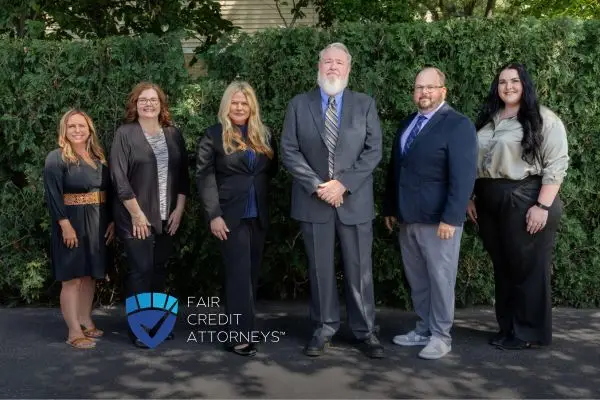
We are a consumer protection law firm that enforces your rights under the Fair Credit Reporting Act. We are not a credit repair company, and we do not offer credit repair services. Our work is legal representation for people whose background reports, credit reports, or consumer files were handled incorrectly.
We work on a contingency fee basis for FCRA matters, which means you pay nothing out of pocket unless we win your case. If an incorrect background check cost you a job offer, schedule a free consultation with our team, and we will review what happened and explain your options in plain language.
If a background check mistake has already affected a job offer or your career, do not wait to find out where you stand. Call Fair Credit Attorneys today for a free case review, and let us help you understand what your report should actually say.
Frequently Asked Questions
An employer can deny a job based on a background check, but the FCRA requires specific steps first, including a pre-adverse action notice and a chance to respond. If those steps were skipped, or the report itself was wrong, you may have a claim worth reviewing.
Consumer reporting agencies are required to reinvestigate a dispute within a set legal timeframe after you file it. Keep a written record of when you submitted your dispute so you can track this window.
It should not, but outdated records in county court systems, state reports, or older databases sometimes surface expunged or sealed cases anyway. This is one of the most common employment background check errors we see.
A pre-adverse action notice comes before a final decision and gives you a chance to review the report and respond. An adverse action notice comes after the employer has made its decision and explains your rights going forward, including how to get another free report.
No. Ban the box laws vary by state and city, and some only apply to public employers rather than every private-sector company. Check your specific state’s rules or ask an attorney if you are unsure whether one applies to your situation.