On This Page
You disputed an error on your Equifax credit report. You waited. Then the response came back: “verified as accurate.” The mistake is still there, still dragging down your credit score, and still showing up every time a lender checks your credit history, sometimes affecting the interest rate or credit limit you get offered.
This happens more often than most people expect. A dispute investigation is supposed to catch and correct real errors, but sometimes a credit reporting agency simply confirms whatever the furnisher told it the first time, without a real look at your supporting documents. When that happens, you are not out of options. You still have rights under federal law, and there is a clear next step.
If Equifax rejected your dispute and the error is still hurting you, contact Fair Credit Attorneys for a free case review. We do not charge upfront fees to look at your situation.
What to Do If Equifax Verified an Error You Disputed
If Equifax investigated your dispute and verified the information as accurate, you can still act. You can resubmit the dispute with new documentation, add a consumer statement to your file, file a complaint with the Consumer Financial Protection Bureau (CFPB), or have an attorney evaluate whether Equifax or the furnisher violated the Fair Credit Reporting Act (FCRA) during the investigation. A rejected dispute is not the end of the process. It is often the point where a credit reporting problem turns into a legal one.
| If your dispute was… | Do this |
|---|---|
| Rejected with no clear explanation | Request the full investigation results in writing |
| Rejected, but you have new documents | Resubmit with specifics: account numbers, dates, records |
| Rejected a second time | File a CFPB complaint and consider a legal review |
| Tied to identity theft or a mixed file | Add a fraud alert or security freeze while you escalate |
Why Equifax May Reject a Valid Dispute
Equifax is a credit reporting agency, or CRA, one of the three nationwide bureaus along with Experian and TransUnion. When you file a dispute, Equifax does not independently investigate the underlying facts of your account. Instead, it forwards your dispute to the furnisher, the bank, lender, credit card company, or collection agency that originally reported the information, and asks the furnisher to confirm or correct it.
That step is where disputes often go wrong. A furnisher may glance at an automated summary of your dispute rather than review the documents you sent. If the furnisher simply replies that its own records say the debt or account is accurate, Equifax typically closes the dispute as “verified,” even if your evidence directly contradicts that answer.
| What the process should look like | What often happens instead |
|---|---|
| The furnisher reviews your actual supporting documents | The furnisher glances at an automated summary and skips the documents |
| Your specific explanation drives the investigation | Your explanation gets flattened into a generic dispute code |
| Your file reflects only your own credit accounts and hard inquiries | A mixed credit file lets someone else’s account or hard inquiry attach to your report |
| The furnisher corrects the record when the evidence supports you | The furnisher has a financial incentive to keep reporting the account as-is |
None of these reasons make the rejection final. They are exactly the kind of breakdown that federal consumer protection law was written to address.
Learn More: Filing a dispute with Equifax
Your Rights Under the FCRA After a Failed Dispute
The FCRA is the federal law that governs how credit bureaus and furnishers handle the credit accounts and other information in your file. Because it is federal, these rights apply the same way whether you live in Illinois, Texas, or anywhere else in the country.
A few of the core protections that matter after a rejected dispute:
- The right to a real investigation. Under 15 U.S.C. section 1681i, Equifax generally has 30 days to complete a reasonable reinvestigation of your dispute, extendable to 45 days if you submit new relevant information during that window. A reinvestigation that only rubber-stamps the furnisher’s original answer, without genuinely reviewing your documents, may not meet this legal standard.
- The right to notify the furnisher directly. You can also dispute directly with the company that furnished the information, not just with Equifax. Under CFPB regulations, a furnisher that receives a direct dispute has its own duty to investigate.
- The right to add a consumer statement. If Equifax will not remove or correct an item you disagree with, you can require it to attach a brief statement explaining your side. Any future lender who pulls your file will see it.
- The right to sue for violations. If Equifax or a furnisher failed to conduct a reasonable investigation, willfully ignored your evidence, or continued to report information it knew or should have known was inaccurate, you may have a claim under the FCRA. Consumers can recover actual damages for negligent violations, and for willful violations, statutory damages, punitive damages, and attorney’s fees, though the amount always depends on the specific facts of the case.
- The right to file a federal complaint. You can submit a complaint to the CFPB or the Federal Trade Commission (FTC) describing what happened. This does not replace a legal claim, but it creates an official record of the problem.
We want to be clear about one thing: nobody can promise you a specific dollar amount or a guaranteed outcome. What the law does guarantee is a process, and when that process breaks down, options for holding the credit bureau or furnisher accountable.
What Escalation Actually Looks Like
A rejected dispute does not mean starting over from nothing. It usually means moving through a few more concrete steps.
| Step | Action | Why it matters |
|---|---|---|
| 1 | Request the full investigation results | Confirms whether the furnisher responded at all, and what information updates, if any, were actually made |
| 2 | Strengthen your supporting documents | Specific account numbers, dates, payment history, a marriage certificate for a name change, or a driver’s license showing your current address all beat a general explanation |
| 3 | Send a written dispute by certified mail | Creates a dated, verifiable record, with a confirmation number, that Equifax and the furnisher received your evidence |
| 4 | Dispute directly with the furnisher, not just Equifax | Puts the original source of the error on notice and can resolve things faster |
| 5 | File a CFPB complaint if the second round also fails | Documents the timeline, whether or not you pursue legal action next |
| 6 | Have an attorney review the file | Evaluates whether the investigation met the legal standard, or was a rubber stamp |
How Fair Credit Attorneys Can Help
Once a dispute has been rejected, the next move is not to keep sending the same letter and hoping for a different result. Here is what we actually do when a client comes to us with a verified-but-wrong Equifax dispute.
- We review the investigation itself. We look at what Equifax and the furnisher actually did, whether the 30-to-45-day window was followed, and whether the response shows a genuine review of your documents or a rubber stamp of the furnisher’s original answer.
- We help build a stronger second dispute. If your first attempt lacked specifics, we help identify exactly which documents, account numbers, and dates will make the strongest case for a resubmission or a direct dispute with the furnisher.
- We evaluate your legal claim. If Equifax or the furnisher failed to conduct a reasonable investigation, ignored clear evidence, or kept reporting information it should have known was wrong, we determine whether that rises to a violation of the FCRA and what legal options follow.
- We handle the case on contingency. You do not pay us out of pocket to review your situation or to pursue a claim. Our fee structure depends on the outcome of your case, so there is no upfront cost to find out where you stand.
We are a consumer protection law firm, not a credit repair company. That distinction matters. We do not charge ongoing subscription fees to dispute items on your behalf, and we do not promise to erase accurate information from your credit report. The FCRA exists to correct information that is inaccurate, incomplete, or unverifiable, not to scrub true negative history. If a debt is genuinely yours and correctly reported, no dispute will make it disappear, and anyone who tells you otherwise is not describing how the law actually works. What we can do is make sure the process that is supposed to protect you was actually followed, and hold Equifax or the furnisher accountable when it was not.
Local Context, National Reach
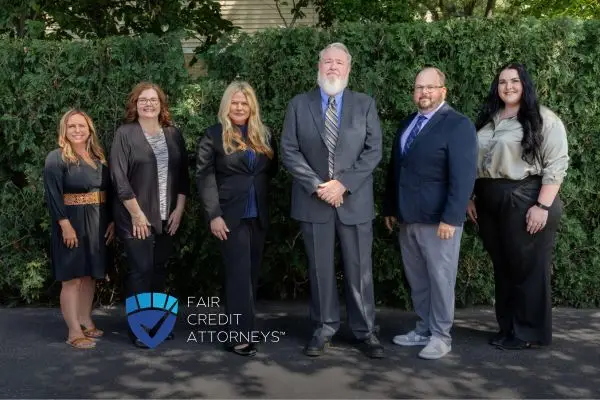
Fair Credit Attorneys is based in Palos Heights, Illinois, and the FCRA is a federal statute, so the same rights apply whether you are calling from the Chicago suburbs or from another state entirely. We work with clients nationwide on Equifax, Experian, and TransUnion disputes that stalled or came back wrong.
We’re Ready to Review Your Case
An Equifax dispute that comes back “verified” when you know it is wrong is frustrating, and it can feel like the system is designed to wear you down. It is not designed that way under the law, even when it works out that way in practice. If your dispute was rejected and the error is still affecting your credit, schedule a free case review with Fair Credit Attorneys today. There is no upfront cost to find out where you stand.
Frequently Asked Questions
Can I dispute the same item with Equifax again? Yes, especially if you have new or stronger documentation than before. A near-identical resubmission with no new information may be treated as frivolous, so focus on adding specifics: account numbers, dates, and documents you did not include the first time.
How long does Equifax have to investigate a dispute? Generally, 30 days from receipt of your dispute, extendable to 45 days if you submit relevant new information during that period, under 15 U.S.C. section 1681i.
Does filing a CFPB complaint cost anything or replace a lawsuit? No, filing a complaint with the CFPB is free and does not require an attorney. It also does not replace a legal claim if your rights were actually violated, but it creates a helpful record.
What if the error involves my identity, not just a wrong balance? If someone else’s information is mixed into your file, or an account was opened fraudulently in your name after a data breach, gather anything that documents the fraud, such as a police report or an FTC identity theft report, and consider placing a security freeze or fraud alert while the dispute is pending.
Do I need a lawyer just to file a dispute? No. Many disputes resolve through the standard process. A lawyer becomes useful once a dispute has been rejected without a real investigation, or once an error keeps costing you credit, housing, or job opportunities.