On This Page
Finding a mistake on your Equifax credit report is more common than most people expect, and it can quietly cost you a lot. A wrong account balance, a credit card you never opened, or a payment marked late when you paid on time can drag your credit score down and follow you into a loan application, a rental screening, or a job offer. Federal law gives you the right to dispute inaccurate or incomplete information on your credit file, but disputes do not always go the way they should. Bureaus miss deadlines, furnishers rubber-stamp their own bad data, and consumers are left staring at the same error months later.
If you have already tried disputing an error with Equifax and it was ignored, “verified” without a real investigation, or never fixed at all, you may have a legal claim under the Fair Credit Reporting Act (FCRA), the federal law that governs credit reporting. Contact Fair Credit Attorneys for a free case review, and we will look at what happened with your dispute and explain your options at no cost to you.
How To Dispute An Error On Your Equifax Credit Report
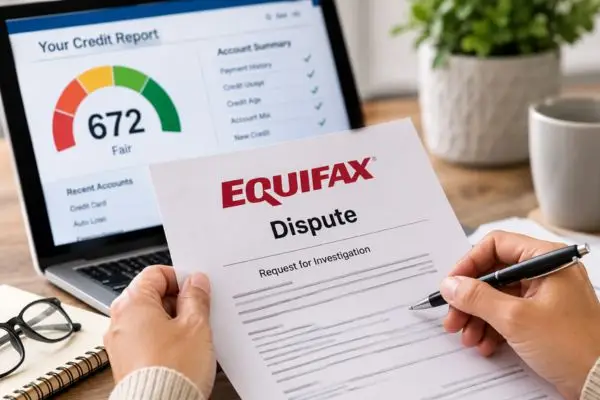
Here is the process in short, with the details below:
- Get your Equifax credit report and review it line by line.
- Gather supporting documents that back up your side (statements, IDs, payment records).
- File your dispute through Equifax’s online dispute center, by mail, or by phone.
- Wait for Equifax to investigate, which the FCRA generally caps at 30 to 45 days.
- Review the outcome, and if the error is not fixed, escalate it rather than dropping it.
Each step is explained in detail below, including what to do if Equifax sides with the company that reported the bad information instead of with you.
What Counts As An Equifax Credit Report Error
Equifax is one of the three nationwide credit reporting agencies, along with Experian and TransUnion. Each one keeps its own version of your credit file, built from information that lenders, landlords, and collection agencies (called furnishers) send in. Equifax does not decide whether you pay your bills. It only reports what furnishers tell it, which is exactly why mistakes happen.
Common errors on an Equifax report include:
- Accounts that are not yours, sometimes a sign of identity theft or a mixed credit file where your information gets tangled with someone else’s, often someone with a similar name
- A credit card company or lender reporting a balance, payment status, or account as open when it was closed or paid off
- Duplicate credit accounts for a single debt
- Incorrect personal information, like a wrong address, employer, or misspelled name
- Outdated negative information that is inaccurate or should have aged off your file
- Hard inquiries you never authorized
- Public records, like a bankruptcy or judgment, listed incorrectly or past when they should have dropped off
One area worth a plain-English note: medical debt. A 2025 federal rule that would have banned most medical debt from credit reports nationwide was struck down in court, so it is not currently a legal requirement. What still applies in practice is that Equifax, along with Experian and TransUnion, voluntarily stopped reporting paid medical collections and medical collection debt under $500 as of 2022 to 2023. That is a bureau policy, not a guarantee, and it can change.
See examples of credit report errors for a longer breakdown of what shows up most often.
Your Rights Under The Fair Credit Reporting Act
The FCRA is a federal law that governs how credit reporting companies like Equifax collect, store, and share your information. It gives you specific, enforceable rights when your full credit report contains something wrong.
Under the FCRA, you have the right to:
- Dispute any information in your file that is inaccurate, incomplete, or that you cannot verify
- Have Equifax investigate your dispute and forward it to the furnisher that reported the information
- Get the results of that investigation, in writing, generally within 30 to 45 days
- Add a consumer statement to your file explaining your side, if Equifax says the disputed item is accurate
- Get a free copy of your report weekly from each bureau through AnnualCreditReport.com
- Place a free fraud alert or security freeze on your file
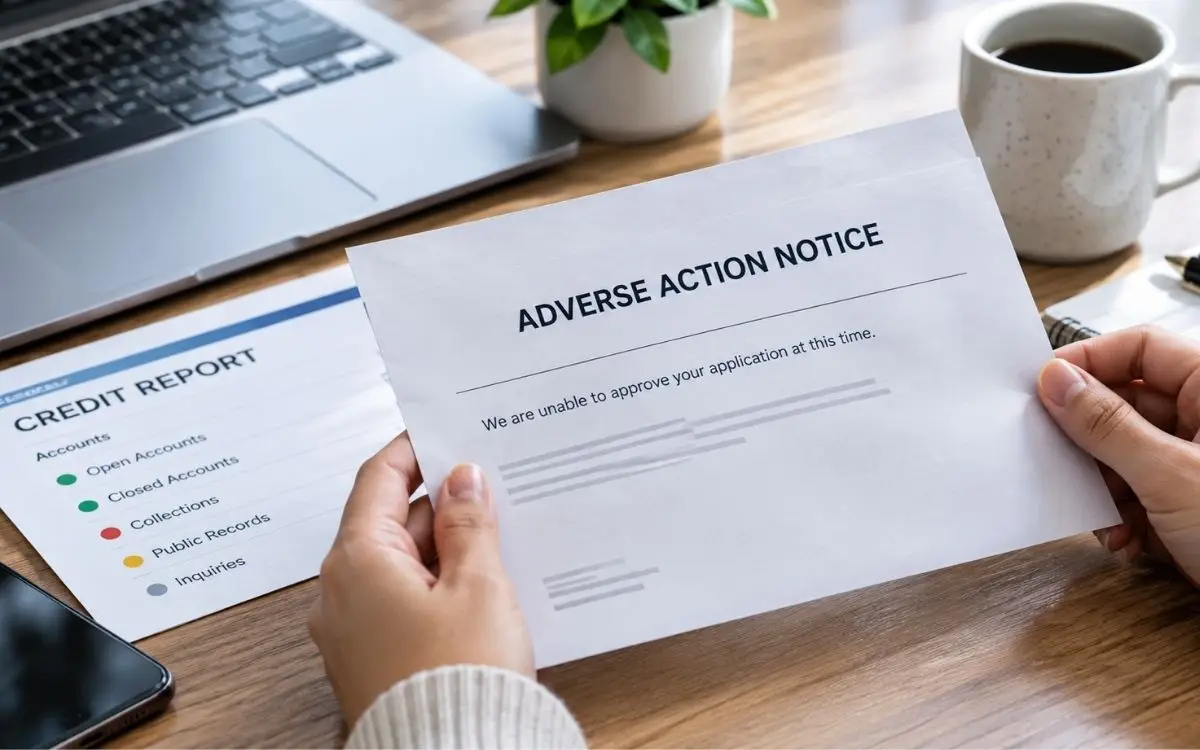
- Know when a business takes adverse action against you, like a denial, based on your report, and get the details behind it
Learn more about how the adverse action process works if you were denied credit, housing, or a job because of your report.
The Equifax Dispute And Reinvestigation Process
Here is what the process looks like from start to finish, step by step.
Step 1: Get And Review Your Equifax Report
Start with a free copy of your report from AnnualCreditReport.com so you can see exactly what Equifax has on file. Go through it slowly and compare it against your own records. Check personal information, credit history, account information, and every credit inquiry listed.
Step 2: Gather Your Supporting Documents
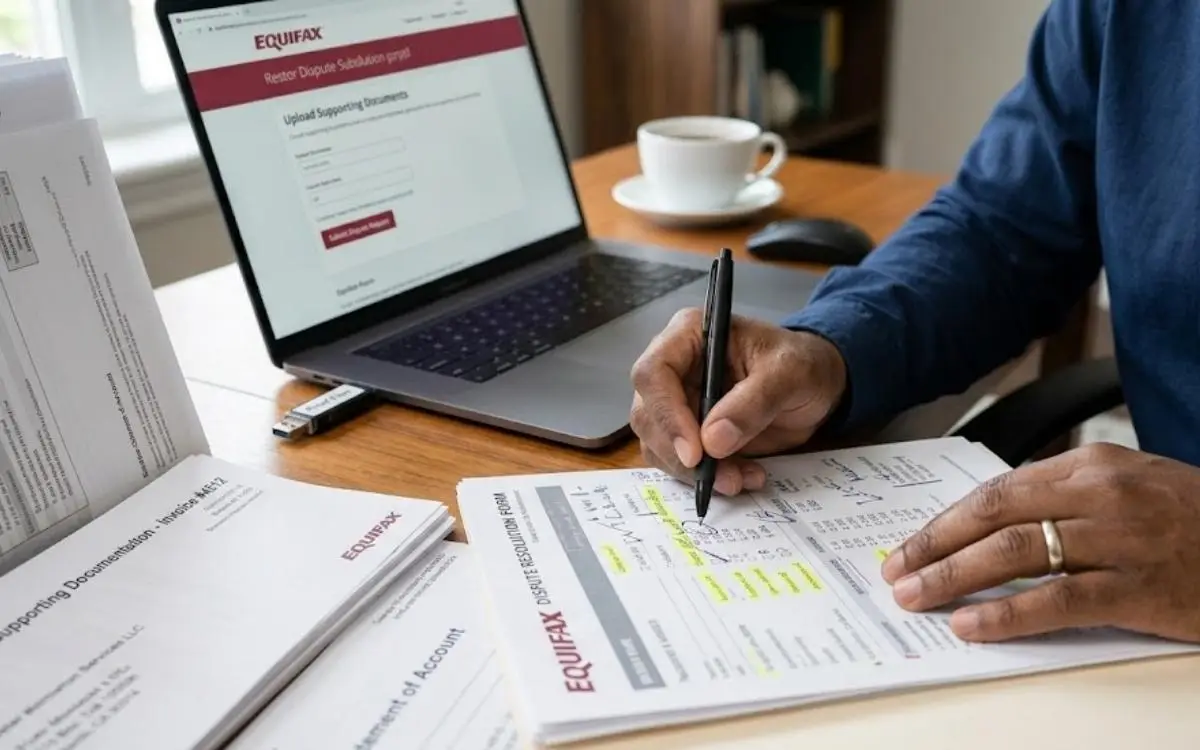
Before you file anything, collect whatever backs up your claim. That might mean bank statements, payoff letters, a marriage certificate if a name change caused a mismatch, or a police report and FTC identity theft report if fraud is involved. Send copies, never your only originals.
Step 3: Choose How You File Your Dispute
| Method | Best For | What You Need | What To Expect |
|---|---|---|---|
| Dispute online | Fastest option; uploading documents directly | A myEquifax account, scanned or photographed supporting documents | You will get a dispute confirmation number immediately, and can track it through the dispute center |
| Dispute by mail | Detailed disputes with several documents | A written dispute letter, copies of your documents, certified mail with return receipt | Slower to start; keep your mailing receipt as proof of when you filed |
| Dispute by phone | A single, simple error | Your report number and a clear description of the mistake | Equifax customer service may still ask you to confirm it in writing or online |
If you have trouble accessing your myEquifax account, Equifax Support can help you recover it, or you can use the mailed dispute form instead.
Step 4: Equifax’s Investigation
Under the FCRA, Equifax generally has 30 days to complete its dispute investigation once it receives your dispute request, extendable to 45 days if you send Equifax more relevant information during that window (15 U.S.C. § 1681i; CFPB Circular 2022-07). Equifax forwards your dispute to whichever furnisher reported the information, and that company has its own legal duty to investigate and respond.
Step 5: Understanding The Investigation Results
Equifax will send you the investigation results in writing. One of three things typically happens: the item is corrected or removed, the furnisher “verifies” it as accurate and it stays, or you get a vague, boilerplate response that does not really address what you disputed.
Protecting Your File While You Wait
If your error involves fraud, identity theft, or you are worried about new accounts being opened in your name, you do not have to wait for a dispute to resolve before locking things down:
| Protection | What It Does | Cost |
|---|---|---|
| Fraud alert | Tells lenders to verify your identity before opening new credit in your name | Free |
| Security freeze | Blocks new creditors from accessing your file, so new accounts generally cannot be opened at all | Free at Equifax, Experian, and TransUnion |
| Equifax credit report lock | Equifax’s own version of a freeze, toggled instantly through myEquifax or the Lock & Alert app | Free for the basic lock |
Equifax also offers Equifax Core Credit™, a free plan that includes a daily Equifax credit report and score, and Equifax Complete™, a paid family of credit and identity monitoring plans with more frequent credit monitoring and ID theft protection features across all three bureaus. Neither is a substitute for disputing an actual error, and neither is required to exercise your FCRA rights.
What You May Be Entitled To If Equifax Won’t Fix The Error
If you disputed an error and Equifax or the furnisher ignored it, rubber-stamped it as “verified” without a real investigation, or missed its deadline, that can be a violation of the FCRA, not just bad customer service.
The law separates violations into two categories:
- Negligent violations, where Equifax or a furnisher failed to follow the law without meaning to, can allow you to recover your actual damages plus attorney’s fees and costs (15 U.S.C. § 1681o).
- Willful violations, where the failure was intentional or showed reckless disregard for your rights, can allow statutory damages, actual damages, punitive damages, and attorney’s fees and costs (15 U.S.C. § 1681n).
What you actually recover depends entirely on the facts of your case, including what documentation you have and how Equifax and the furnisher responded. No attorney can promise a specific dollar amount before reviewing your file, and you should be skeptical of anyone who does. There is also a deadline: FCRA claims generally must be filed within two years of when you discovered the violation, or five years from when it happened, whichever comes first (15 U.S.C. § 1681p).
What To Do Next
If your Equifax dispute stalled or came back wrong, a few things help before you take the next step:
- Save every document related to your dispute: the confirmation number, your dispute letter or online submission, and Equifax’s written response.
- Note the dates you filed and the date you got a response, since the 30 to 45 day window matters.
- Keep any denial letters, adverse action notices, or other proof of how the error affected you.
- Avoid re-disputing the exact same information over and over without new evidence. It rarely changes the outcome and can slow down a legal claim later.
- Talk to an FCRA attorney about whether Equifax or the furnisher followed the law.
Serving Clients Nationwide From Palos Heights, Illinois
The FCRA is a federal law, so your rights are the same whether you live down the street from our office or across the country. Fair Credit Attorneys is based in Palos Heights, Illinois, and represents consumers in all 50 states in FCRA disputes against the nationwide credit bureaus and the companies that report to them.
How Fair Credit Attorneys Helps

Fair Credit Attorneys is a consumer protection law firm. We are not a credit repair company, and we do not charge a monthly fee to “clean up” your credit. We investigate whether Equifax, another bureau, or a furnisher violated your rights under the FCRA, and when they did, we pursue the case on your behalf. Most of our FCRA work is handled on a contingency basis, meaning you typically pay nothing upfront and our fee depends on the outcome of your case.
We have represented consumers against large national furnishers and all three major bureaus, and we know how these disputes tend to play out once they leave the standard online process. If you have already tried disputing an error and gotten nowhere, contact us for a free case review. We will look at your dispute history and tell you plainly whether we think you have a claim worth pursuing.
Frequently Asked Questions
Under the FCRA, Equifax generally has 30 days to complete its investigation after receiving your dispute. That window can extend to 45 days if you send Equifax additional relevant information during the original 30-day period.
You can ask Equifax to add a consumer statement to your file explaining your side, contact the furnisher directly, or file a new dispute with new supporting documents. If the item genuinely is not yours or was never properly investigated, that is also when it makes sense to talk to an FCRA attorney about your legal options.
No. Equifax is a credit reporting agency, meaning it collects and reports information from lenders and other furnishers. It is not a credit repair company, and neither is Fair Credit Attorneys. We are a law firm that enforces your rights under the FCRA when a bureau or furnisher gets something wrong and will not fix it.
Filing a dispute itself does not lower your credit score. The dispute process is a right the FCRA gives you specifically so you can correct your file without being penalized for using it.
A mixed credit file happens when your information gets combined with another consumer’s, often someone with a similar name or a similar Social Security number. This is a specific, recognized problem under the FCRA and is usually worth a closer look from an attorney, since it can take more than a standard dispute to fully untangle.